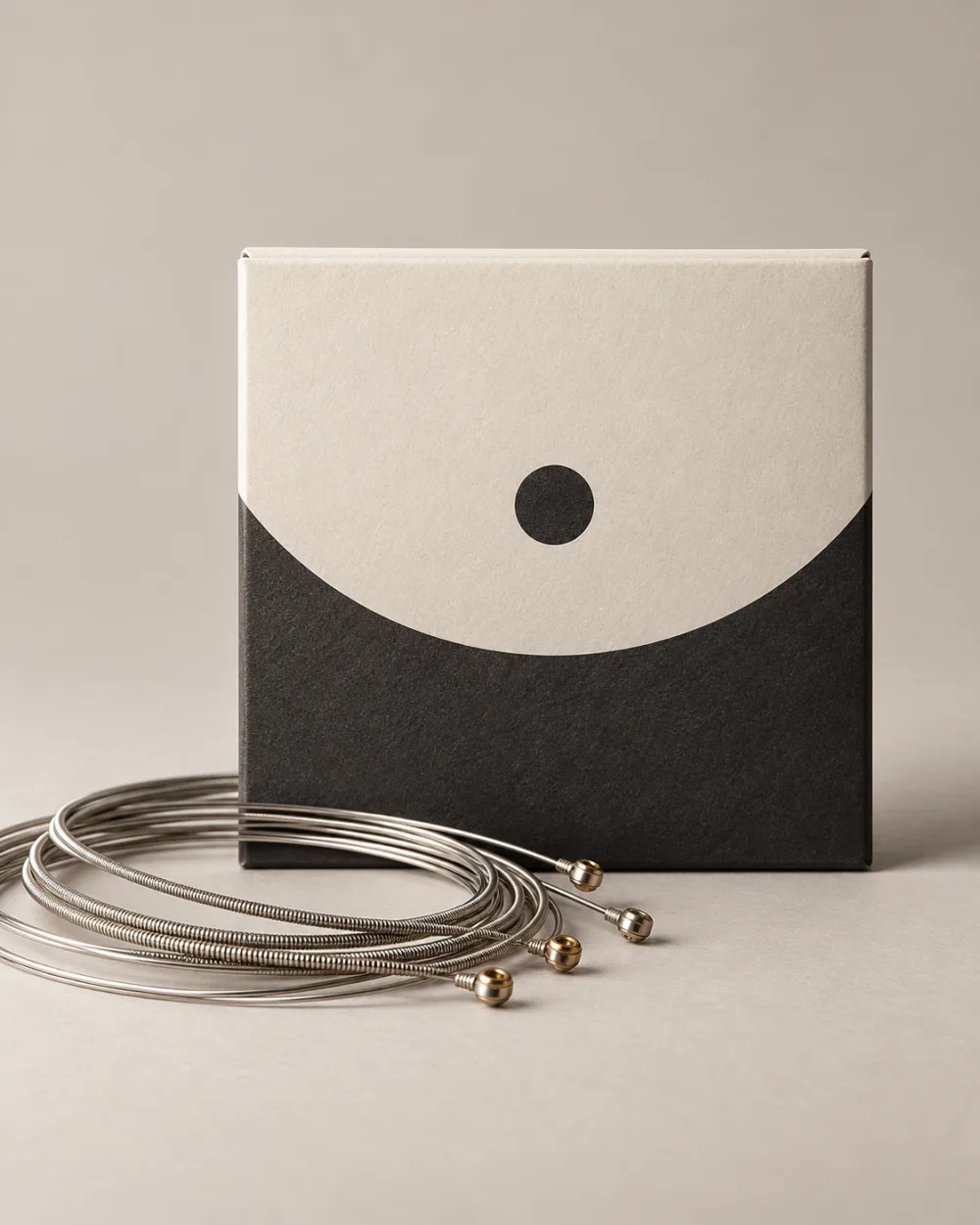
A fresh set of strings is a small purchase that can change how a familiar guitar feels under your hands. Before choosing a different set, find out what is already on the instrument. The packet, a previous order or your guitar technician can give you a useful baseline.
Read the numbers first.
String gauge describes thickness, usually in thousandths of an inch. A set described as “10s” generally starts with a .010-inch high E string, but that single number does not describe the whole set. Check all six gauges when comparing packets, especially if you like the feel of your lower strings.
Treat feel as the starting point.
Lighter strings generally make fretting and bending easier; heavier sets can feel firmer. The result also depends on the guitar, its setup and your tuning. There is no useful prize for choosing a gauge that makes the music you want to play unnecessarily difficult.
Change one thing at a time.
If you are curious about a different set, keep the rest of your routine familiar. Use your usual tuning and play the same short passage. Notice three things: the effort of a bend, the clarity of a chord and how the lower strings respond to your picking. Write down what you noticed before comparing another set.
Moving to a different gauge can mean the instrument needs setup adjustments. If you are unsure how a change will affect your particular guitar, ask a technician rather than treating adjustments as a guessing game.
Keep a small record.
- Save the brand, material and full gauge sequence.
- Note your tuning and the guitar you used.
- Write one sentence about feel, not just whether the strings sounded “better”.
A useful choice is one you can explain in your own playing terms. “The bends feel easier, and I still like the low-string response” tells you far more than a number on its own.
Further reading: Fender’s guide to electric guitar strings and Fender’s setup guidance when changing gauges.