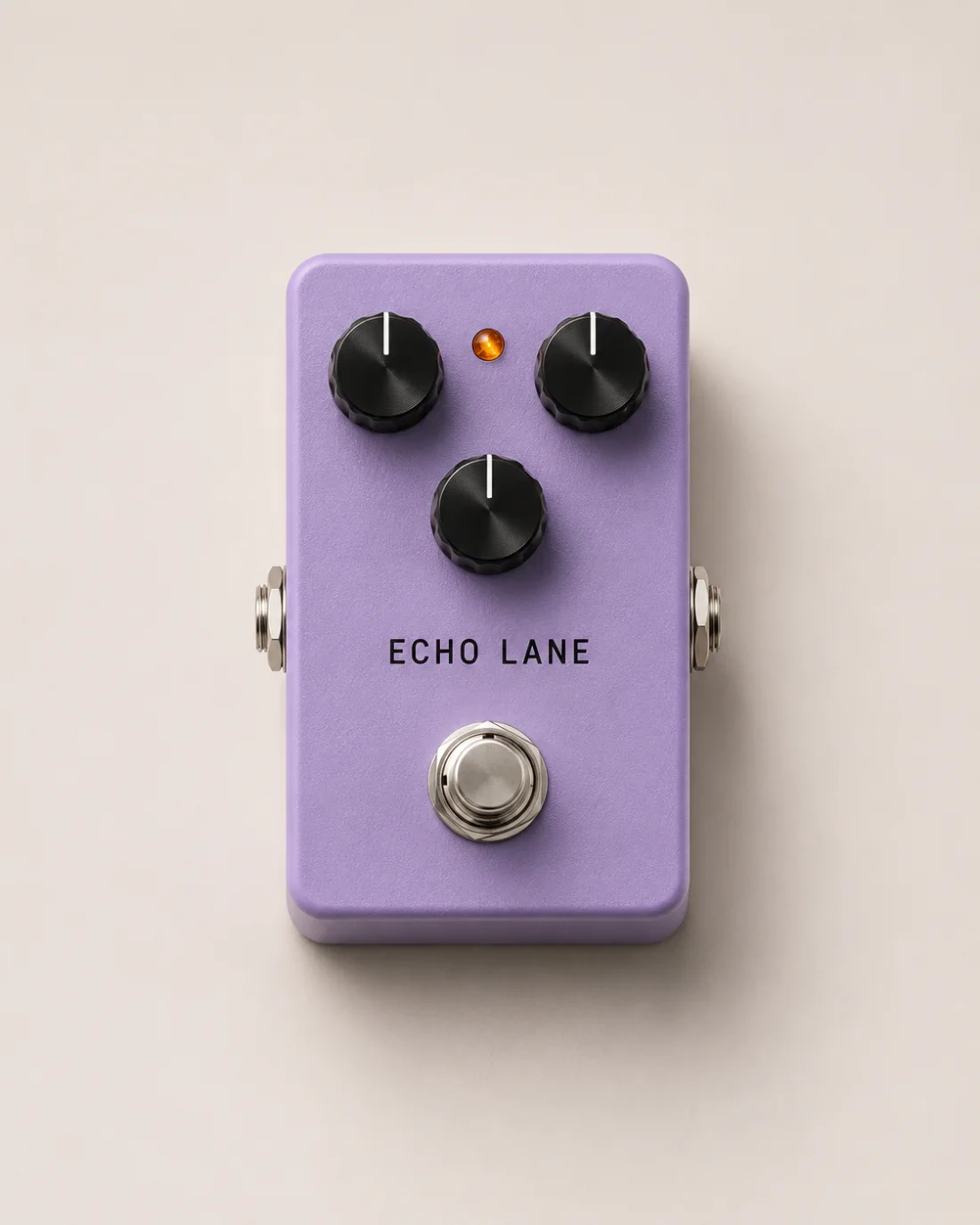
Delay repeats a sound after you play it. That simple idea can become a quiet companion, a rhythmic part or a texture of its own. Instead of turning every control at once, use one short riff to hear what each change contributes.
Begin with the dry phrase.
Play a two-bar idea without the effect. Leave a little silence at the end so you can hear what happens after the last note. Keep your instrument and amplifier settings familiar. When you add delay, the difference will be easier to follow if the original phrase stays the same.
Try a small shadow.
Start with a low effect level and a modest number of repeats. You are listening for a little movement behind the note rather than a second performance competing with it. Play the phrase, stop, and notice whether the repeat fills a useful space. Bring the level down again if the original playing loses definition.
Let the repeat answer.
Move to a longer delay time and leave room for an audible reply. Play fewer notes and listen to the pattern created by the original and its repeat together. If your pedal offers tap tempo, try it as a convenient way to explore the song’s pulse; the exact controls depend on the model.
Build a texture, then clear it.
Try a higher effect level with a few sustained notes. Listen to how the repeats overlap. Change only one control, play again, and compare. Keep the output at a comfortable level while experimenting, particularly when increasing feedback: on some delay designs, repeats can build rather than fade away.
Finish by turning the effect off and playing the original riff again. Decide which version serves the music you are making today. You do not need to keep the biggest sound; sometimes one quiet echo is the detail that makes the part feel complete.
Effect terminology: Roland’s guide to reverb, echo and delay. Follow your own pedal’s manual for its controls and operating requirements.